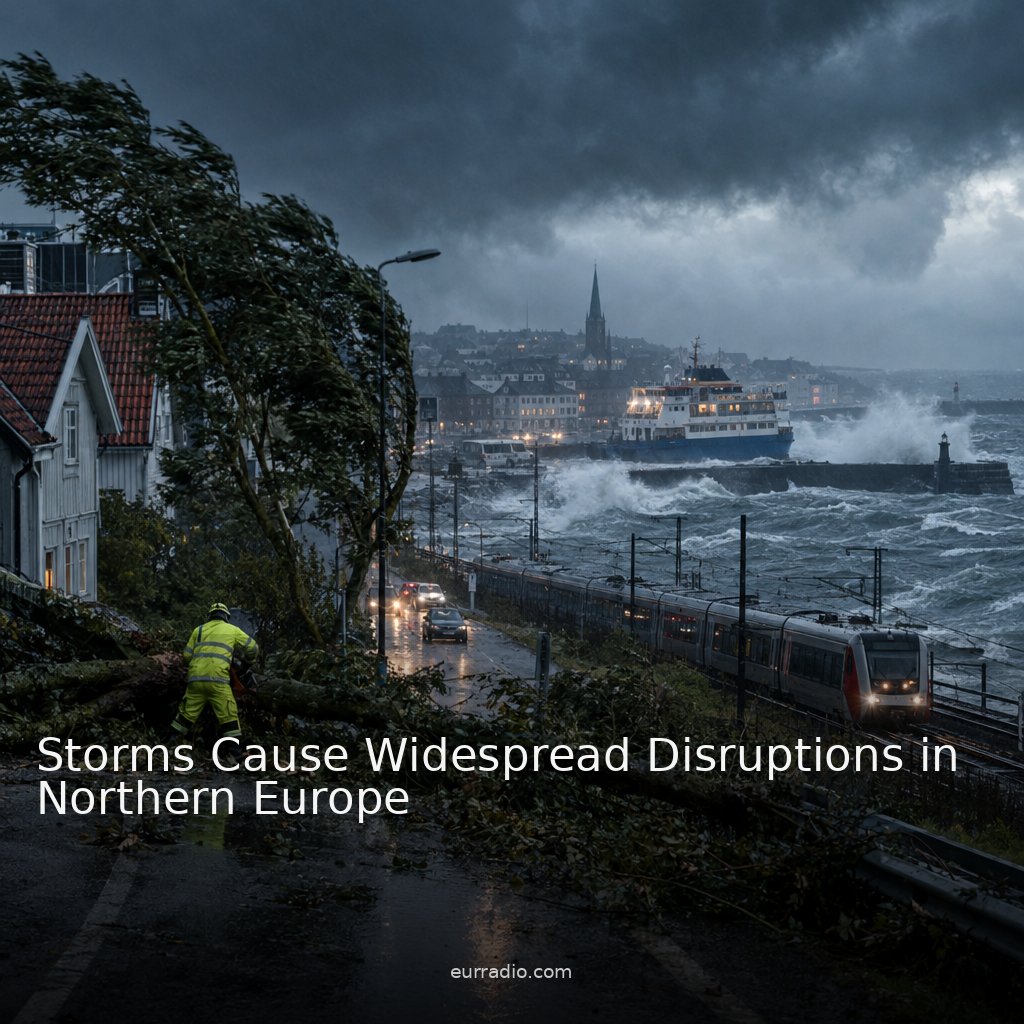
Storm Boelo has cut power to over 150,000 homes across northern Europe, affecting 82,000 in Britain alone. The storm has led to hundreds of flight cancellations and significant…





Our editorial team, supported by AI-powered tools, creates modern news bulletins designed to deliver the most important information without the noise. Each release is dynamic, fact-focused, and built for listeners who value clarity and fast insight into global events.
Audio news format
convenient to listen anytime: during your morning run, commute, break, or evening wind-down.
Under 5 minutes
only the key updates from politics, economy, culture, technology, and major world events.
European perspective, global coverage
with a focus on stories that impact our region and everyday life.
Created with AI support
enabling faster processing, accuracy, and an innovative storytelling experience.
Stay informed, listen to the latest releases, and get the updates that matter
– smarter and faster with EUR Radio.